

The Role of UX in Digital Marketing Success
Why UX Is the Missing Link in Most Marketing Strategies
You can have a polished campaign, strong content, well-targeted ads, and a valuable offer — yet still struggle to turn traffic into real business results.
Often, the issue is not the campaign itself. It is the experience that follows the click.
When someone lands on your website, opens a lead magnet, fills out a form, or tries to book a call, they are making quick decisions: Do I understand this? Is this worth my time? Do I trust this brand? What am I supposed to do next?
That is where UX in digital marketing matters.
User experience is not simply a design concern to revisit when a website starts looking dated. It is a central part of how digital marketing performs. It affects whether users stay on a page, explore your offer, sign up, make a purchase, or leave before taking action.
At Bright Moon Digital, we see UX as the connection between attention and conversion. Marketing brings people in; a clear, purposeful digital experience gives them a reason to stay and move forward. Our approach to web design and development combines visual clarity, functionality, and performance so every touchpoint supports the customer journey.
What Is UX, Really?
UX, or user experience, describes how people interact with and feel about your brand across every digital touchpoint.
That includes your:
- Website and landing pages
- Mobile experience
- Navigation and search
- Lead generation forms
- Blog content and resource hub
- Email flows
- Booking or checkout process
- Confirmation pages and error messages
- Client portals and internal systems
Good UX feels simple. People can quickly understand what you offer, find the information they need, and take the next step without friction or confusion.
Strong user experiences tend to be:
- Intuitive and easy to navigate
- Built around real user needs and behaviour
- Clear about what happens next
- Consistent across devices and channels
- Accessible to a broad range of users
- Continuously improved using feedback and data
Poor UX does the opposite. It creates uncertainty, slows users down, damages trust, and makes a potentially interested lead work too hard to convert.
Why UX Is a Marketing Problem — Not Just a Design One
Marketing and UX should never operate as separate systems.
A paid ad may earn a click, but the landing page determines whether that click becomes a lead. An email may create interest, but an unclear form or broken mobile experience can stop the customer journey completely. A great social media strategy can build awareness, but a confusing website can undo that work in seconds.
UX in digital marketing is the bridge between your message and the action you want someone to take.
Think of it this way: your marketing makes a promise. Your user experience proves whether that promise is easy, credible, and worth following through on.
When the offer, copy, design, and customer journey are aligned, the experience feels effortless. When they are disconnected, users hesitate — and hesitation is where conversions are lost.
Where UX Shows Up Across the Marketing Funnel
UX is not limited to a homepage redesign. It shapes every stage of the customer journey.
Top of Funnel: Making a Strong First Impression
At the awareness stage, users are deciding whether your brand is relevant to them. Your website needs to make that decision easy.
Key UX considerations include:
- Fast loading pages
- A clear headline that explains the value quickly
- Mobile-friendly layouts
- Logical navigation
- Easy-to-see calls to action
- Readable fonts, contrast, and content hierarchy
Visitors should not have to search for basic information. Within a few seconds, they should understand who you are, what you do, and where to go next.
A high-performing website starts with a structure built for real users. Explore our approach to custom web design and development.
Middle of Funnel: Building Confidence
Once someone is interested, UX helps them explore without getting overwhelmed.
This can include:
- Easy-to-scan blog content
- Useful internal links between related pages
- Clear service pages and case studies
- Lead magnets that are simple to access
- Email journeys with one obvious next step
- Thoughtful transitions between education and conversion
At this stage, the goal is not to push too hard. It is to make learning about your brand feel natural, useful, and well-organised.
Well-designed email journeys should lead users to a clear next step, not another dead end. Our email newsletter services help brands create campaigns that are easy to read, relevant, and built to convert.
Bottom of Funnel: Removing Friction
At the conversion stage, small barriers can have a large impact.
A booking process, checkout, or contact form should be focused and easy to complete. Ask only for information you genuinely need. Communicate what happens after submission. Use trust signals where they are relevant, such as testimonials, clear policies, secure payment indicators, or credentials.
The fewer doubts and unnecessary steps a user experiences, the easier it is for them to act.
How UX Influences Marketing Performance
UX does not replace your strategy, content, or advertising. It helps all three work harder.
A thoughtful user experience can support key marketing outcomes such as:
- Higher conversion rates: Clear pages, focused calls to action, and streamlined forms make it easier for users to take the next step.
- More qualified leads: When messaging and user flow are aligned, the right people understand your offer before they enquire.
- Better engagement: Helpful structure, visual hierarchy, and easy navigation encourage visitors to spend time with your content.
- More effective paid campaigns: Strong landing-page experiences help you make more of the traffic you are already paying for.
- Greater trust and brand loyalty: When an experience feels clear and considered, users are more likely to see the brand as credible and professional.
UX should be measured alongside your wider marketing performance. Look at user behaviour, form completion, navigation paths, device types, page speed, engagement, and points where people leave the journey.
The objective is not to chase a single metric. It is to understand what is helping users move forward — and what is getting in their way.
Five UX Principles Every Marketer Should Understand
You do not need to be a UX designer to think more intentionally about user experience. Start with these principles.
1. Clarity Over Cleverness
Creative messaging has its place, but users should never need to decode your offer.
Use direct language. Make your value clear. Tell people what they will get, who it is for, and what to do next. A clever headline may catch attention, but clarity is what earns action.
2. Consistency Builds Trust
People feel more comfortable when an experience is predictable.
Buttons should look and behave consistently. Navigation should remain familiar from page to page. Your tone, colours, typography, and calls to action should all feel like part of one brand experience.
Inconsistency creates hesitation. Consistency creates confidence.
3. Mobile-First Is Essential
Many users will encounter your brand on a phone before they ever see it on a desktop.
That means mobile usability cannot be an afterthought. Pages should load quickly, text should be readable without zooming, buttons should be easy to tap, and forms should be simple to complete on a smaller screen.
A beautiful desktop site is not enough if the mobile journey is frustrating.
4. Reduce Unnecessary Friction
Every additional click, field, pop-up, or decision adds effort.
Review your customer journey and ask: Is this step necessary? Does the user know why we are asking for this? Is there a simpler way to achieve the same outcome?
Often, the best UX improvements are not dramatic redesigns. They are small decisions that remove unnecessary work for the user.
5. Give Users Feedback
People need to know that their actions worked.
A form submission should lead to a useful confirmation. A loading state should communicate that something is happening. An error message should explain what needs to be fixed.
These details may seem small, but they create a sense of control and professionalism throughout the journey.
UX and SEO Work Best Together
UX and SEO are often treated as separate disciplines, but they support one another.
Search visibility brings potential customers to your website. UX helps them find value once they arrive.
A well-structured, accessible, mobile-friendly site can support both search engine understanding and real user needs. Fast-loading pages, descriptive headings, readable content, logical internal links, and responsive layouts all contribute to a stronger digital foundation.
Google’s Core Web Vitals also make technical experience important. They assess aspects of page loading, visual stability, and responsiveness — all of which influence how usable a website feels.
At Bright Moon Digital, we build with both discoverability and usability in mind. Our SEO services combine technical optimisation, content strategy, internal linking, and performance improvements — because there is little value in attracting traffic if the site does not give people a clear reason to stay.
UX Shapes Brand Perception
People may not remember every individual interaction with your website. But they will remember how the experience made them feel.
Was it easy or confusing? Helpful or overwhelming? Personal or generic? Smooth or frustrating?
Every one of those answers influences your brand.
A clear, accessible website communicates care. A simple form signals respect for someone’s time. Helpful confirmation messages and well-organised content make a brand feel more credible.
Great UX is not about adding flashy animations or following every new design trend. It is about creating an experience that feels considered, useful, and trustworthy.
UX Matters for Internal Systems, Too
User experience does not stop with your customers.
Internal tools, client portals, onboarding processes, content systems, and team dashboards all benefit from the same principles: clarity, consistency, accessibility, and reduced friction.
When your team can find information quickly, understand workflows, and complete tasks without unnecessary back-and-forth, the business runs more efficiently. Better internal systems support better customer experiences.
That is why Bright Moon Digital approaches UX as a systems challenge — not simply a visual one.
Common UX Mistakes That Hurt Marketing Results
Even strong teams can unintentionally create barriers for users. Some of the most common issues include:
- Too many calls to action competing on one page
- Navigation that hides important information
- Long blocks of copy with no subheadings or visual hierarchy
- Forms that ask for too much information too early
- Pages that are slow or difficult to use on mobile
- Low-contrast text or inaccessible design choices
- Unclear error messages and missing confirmation states
- Sending paid traffic to generic pages instead of focused landing pages
The good news is that these issues are fixable. A UX audit can reveal where users are dropping off and where small improvements can create a more effective path to conversion.
Our UX-First Approach at Bright Moon Digital
We do not treat UX, design, copy, and marketing as separate deliverables. We bring them together from the start.
You can see this thinking in action in our work for Everglades Angels Dog Rescue, where purposeful design, intuitive navigation, and conversion paths were brought together into one cohesive experience.
Our approach typically includes:
- Discovery and journey mapping
We identify the audience, business goals, current customer journey, and points of friction. - Information architecture and wireframing
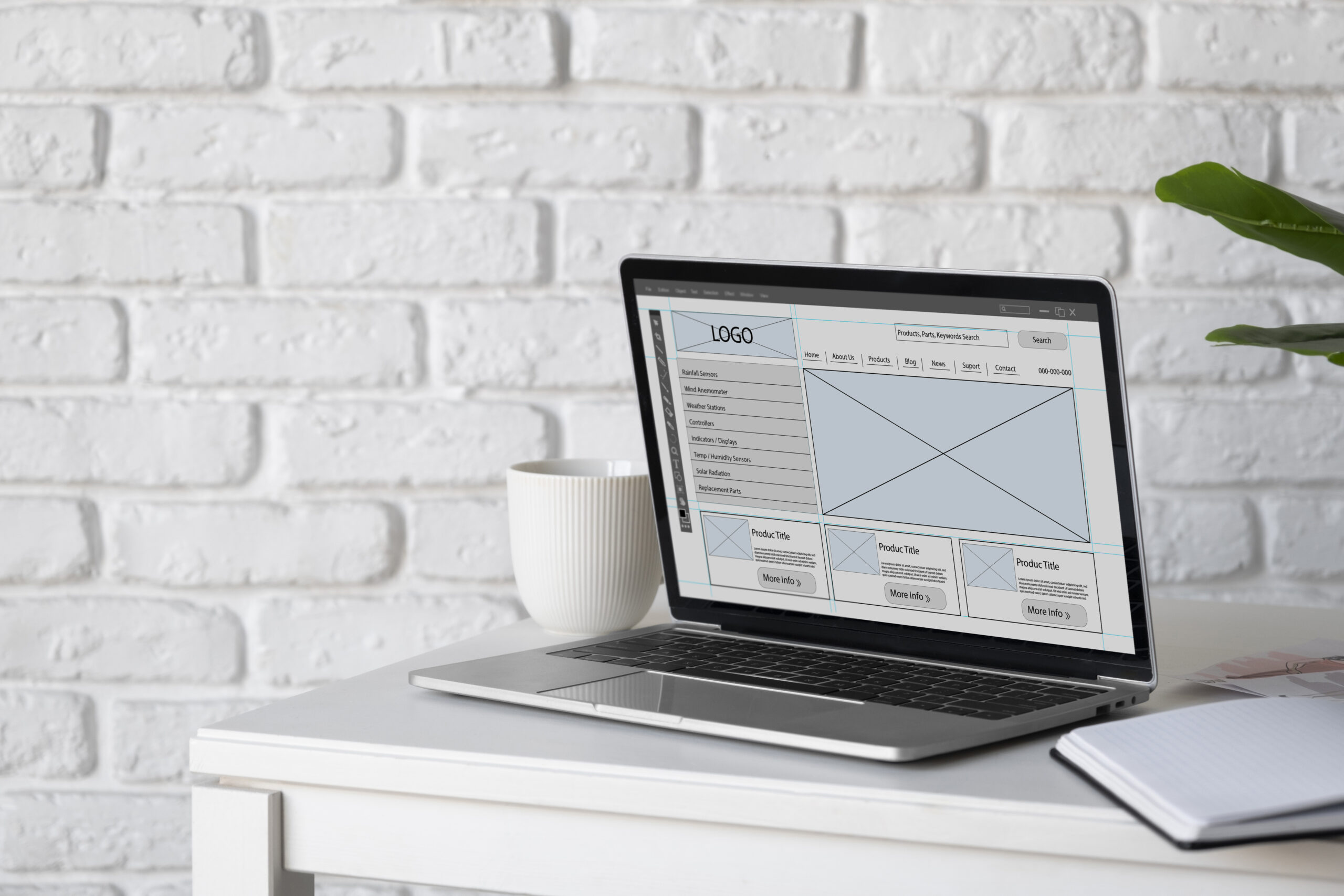
Before visual design begins, we establish page structure, content hierarchy, user paths, and CTA placement. - UX-focused copy and design
We create clear messaging and responsive visual systems that guide users rather than overwhelm them. - Testing and refinement
We review how the experience performs across devices and use data, feedback, and behaviour to identify opportunities to improve. - Ongoing optimisation
Digital experiences should evolve with your business. We help clients measure, learn, and make meaningful changes over time.
Final Thoughts: UX Is a Growth Channel
Many businesses focus on what they want to say. Fewer spend enough time thinking about how easy it is for someone to receive, understand, and act on that message.
That is where UX in digital marketing becomes a competitive advantage.
If your campaigns are generating attention but not enough conversions, do not only look at the ad, the offer, or the audience. Look at the experience around it. Is it clear? Is it useful? Does it build confidence? Does it make the next action obvious?
At Bright Moon Digital, we combine strategy, content, design, and development to create digital experiences that work for real people — and support real business growth.
Because when your digital experience flows, your marketing has room to perform.
UX looks different in every industry. See how we approached usability and digital presence for a financial-services business in our Accounting At All Cost case study.
Ready to Make Your Digital Experience Work Harder?
If your website or funnel is attracting traffic but not converting as it should, it may be time to look at the user experience.
Contact Bright Moon Digital to discuss a UX-focused website, SEO, or digital marketing strategy.
Related posts

How Custom Fields Can Enhance Your WordPress Projects
WordPress is one of the most versatile content management systems available, powering over 40% of al...
Add Comment